Gardener Raynes Park: Recycling and Sustainability
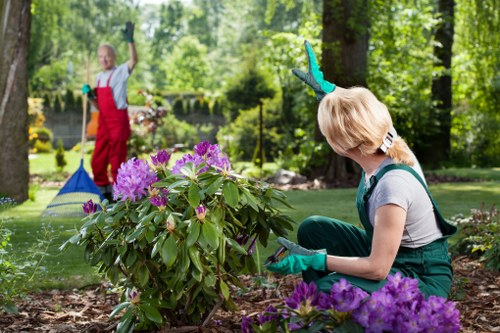 Gardener Raynes Park is committed to creating an eco-friendly waste disposal area and a practical, low-impact sustainable rubbish gardening area. This page outlines our approach to waste separation, reuse, green waste processing and the practical steps we take to reduce carbon emissions from garden waste management. Whether you are a Raynes Park gardener or part of a community group, you will find clear actions, targets and partnership projects aimed at boosting local recycling and reuse.
Our recycling percentage target and why it matters
Our target is to reach a 65% recycling and reuse rate across all Gardener Raynes Park operations by 2028. This target covers mixed recycling streams, organics (food and garden waste), and items diverted to repair and reuse channels. Reaching 65% will help lower landfill-bound waste, cut greenhouse gas emissions and demonstrate leadership in Raynes Park sustainability.
How we support the borough's approach to waste separation
We align with the borough's approach to waste separation, supporting standard kerbside streams such as glass, paper and cardboard, plastic and cans, and separate food and garden waste where available. At our on-site eco-friendly waste disposal area we provide clear signage and separate containers for:- Paper & cardboard for clean recyclable fibre
- Glass, cans & plastics for mixed recycling
- Food waste for municipal or community anaerobic digestion and composting
- Green waste for on-site composting, mulching and soil amendment
Designing the sustainable rubbish gardening area
Our sustainable rubbish gardening area is more than a skip: it is an integrated system for reuse and resource recovery. We prioritise on-site processing: shredding woody prunings and producing mulch, layering green waste into in-vessel or bay composters, and storing reusable pots and toolkit items for redistribution. The aim is to keep materials moving back into productive use and reduce haulage to distant facilities.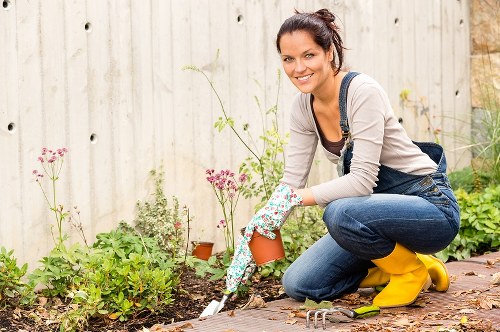 Partnerships with charities and social enterprises are central to our reuse strategy. We work with community charities, local reuse organisations and social enterprises to redirect usable items such as:
- Garden tools, planters and raised-bed timber
- Working pots and seed trays
- Unbroken garden furniture suitable for refurbishment
Local transfer stations and facility links
Gardener Raynes Park maintains working links with nearby transfer stations and civic amenity sites in the borough and neighbouring districts. Rather than sending mixed loads to landfill, we sort on-site and consolidate residues for transfer to resource recovery centres, composting facilities and municipal transfer stations. This reduces double handling and ensures recyclable materials enter appropriate processing streams.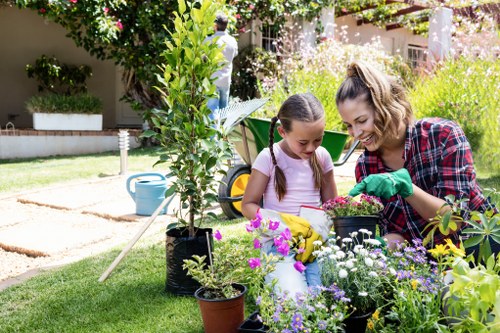
Low-carbon vans and low-emission logistics
To reduce transport emissions we operate a fleet of low-carbon vans, prioritising fully electric vehicles (EVs) where range and payload allow, and Euro 6 hybrid vans for heavier loads. Route optimisation, load consolidation and scheduled trips to transfer stations cut mileage and emissions. Vans are fitted with telematics to monitor idling, speed and fuel efficiency so we can continuously lower our carbon footprint.Practical recycling and reuse activities on site
The eco-friendly waste disposal area supports a range of activities relevant to gardeners across the borough:- Community composting for green and food waste, returning compost to plots and planters
- Tool libraries that accept and lend good-condition equipment
- Material swaps for pots, seed trays and garden fabrics
- Wood-chipping and mulch production to preserve soil moisture and suppress weeds
 Community engagement, monitoring and continuous improvement
We publish regular performance updates and measure progress against our 65% recycling target. Key metrics include total tonnes diverted, percentage reuse, volume of compost produced and vehicular CO2 saved through low-carbon vans and route efficiency. We also work closely with local stakeholders to refine sorting, signage and collection schedules so that the system is intuitive for residents and volunteers alike.
Community engagement, monitoring and continuous improvement
We publish regular performance updates and measure progress against our 65% recycling target. Key metrics include total tonnes diverted, percentage reuse, volume of compost produced and vehicular CO2 saved through low-carbon vans and route efficiency. We also work closely with local stakeholders to refine sorting, signage and collection schedules so that the system is intuitive for residents and volunteers alike.
How Raynes Park gardeners can help
Whether you are a professional gardener in Raynes Park or a volunteer allotmenteer, your actions matter. Please support our approach by:- Separating waste at source — put glass, cans, paper, plastics and food/green waste into their designated containers
- Donating reusable items — hand on working tools, pots and furniture to our charity partners instead of discarding them
- Using compost and mulch produced locally to close the loop
- Supporting low-carbon logistics — consolidate small drop-offs and coordinate with our scheduled collections to reduce trips